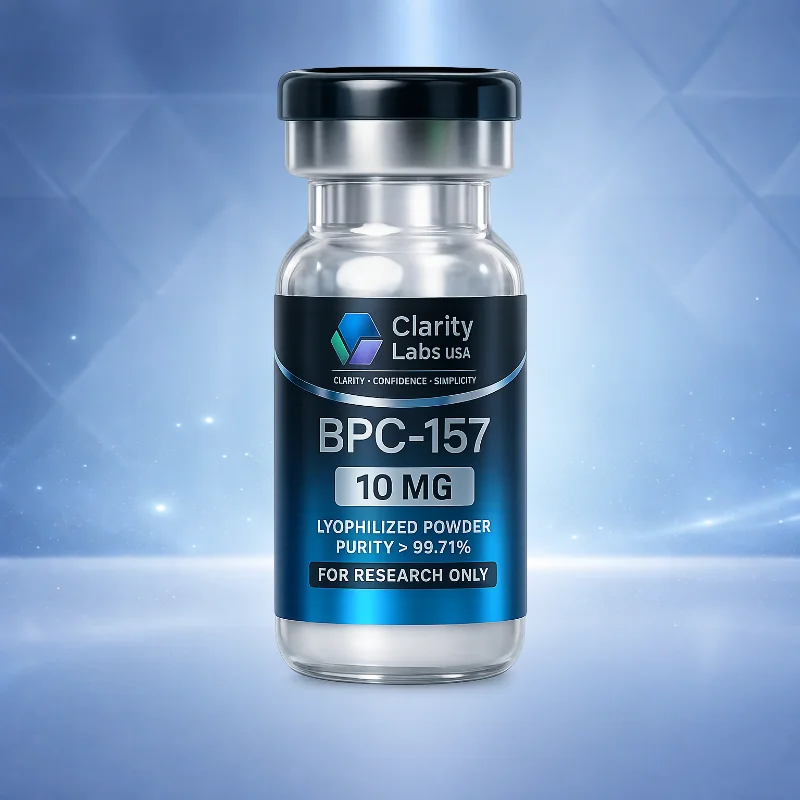
SYSTEMIC RECOVERY SUPPORT PEPTIDE
A pentadecapeptide studied for its interaction with pathways associated with tissue recovery, cellular repair, and structural integrity.
For research and laboratory use only.
Research Profile
BPC-157 is commonly explored for its interaction with recovery-associated pathways, particularly tissue repair and structural resilience mechanisms.
Commonly explored for its interaction with recovery-associated pathways, particularly tissue repair and structural resilience mechanisms.
Frequently incorporated into protocols focused on joint and connective tissue research, often alongside structured training and conditioning programs.
Its systemic character makes it relevant across multiple research domains — soft tissue recovery, structural integrity, and long-term training sustainability.
Positioned as a foundational recovery support compound, BPC-157 is typically selected as an entry point into structured peptide research programs.
Research Applications
BPC-157 is commonly explored for its interaction with recovery-associated pathways, particularly tissue repair and structural resilience mechanisms.
Frequently incorporated into protocols focused on joint and connective tissue research, often alongside structured training and conditioning programs.
Its systemic character makes it relevant across multiple research domains — soft tissue recovery, structural integrity, and long-term training sustainability.
Positioned as a foundational recovery support compound, BPC-157 is typically selected as an entry point into structured peptide research programs.
Researcher Profiles
BPC-157 is typically explored by individuals engaged in demanding training programs and structured recovery optimization phases.
Note: BPC-157 is generally positioned as a foundational compound — commonly selected by researchers who have established baseline recovery protocols and are exploring structured support strategies.
Protocol Context
General observations from the research literature on structured BPC-157 implementation frameworks.
BPC-157 research protocols are typically aligned with recovery demand cycles. Consistency of application across a defined phase is commonly emphasized, with alignment to physical stress periods considered relevant to sound research design.
Its systemic profile — not receptor-site specific in the way of targeted pathway agents — contributes to its broad interest across recovery-focused research categories. This characteristic is commonly noted when comparing BPC-157 to more targeted compounds.
Individual variability in recovery response is consistently noted in the literature. Researchers are encouraged to document baseline metrics, track response indicators, and align their conclusions with overall training and recovery data.
Educational Resource: Additional research overview materials, including compound profile summaries and protocol design frameworks, are available in the ClarityLabsUSA educational resource library.
Our Approach
We prioritize clarity, confidence, and simplicity. Our focus is structured progression, disciplined implementation, and intelligent phase design — not hype or extreme claims.
Every compound we carry is positioned within a clear research tier — foundational, complementary, or advanced. No guesswork.
We believe informed researchers make better decisions than hype-driven buyers.
Size Options
Choose the size that fits your research protocol. All sizes undergo the same rigorous third-party testing.
Most commonly selected for structured recovery cycles. Matches typical research progression timelines and training phase durations.
$64.99Quality Assurance
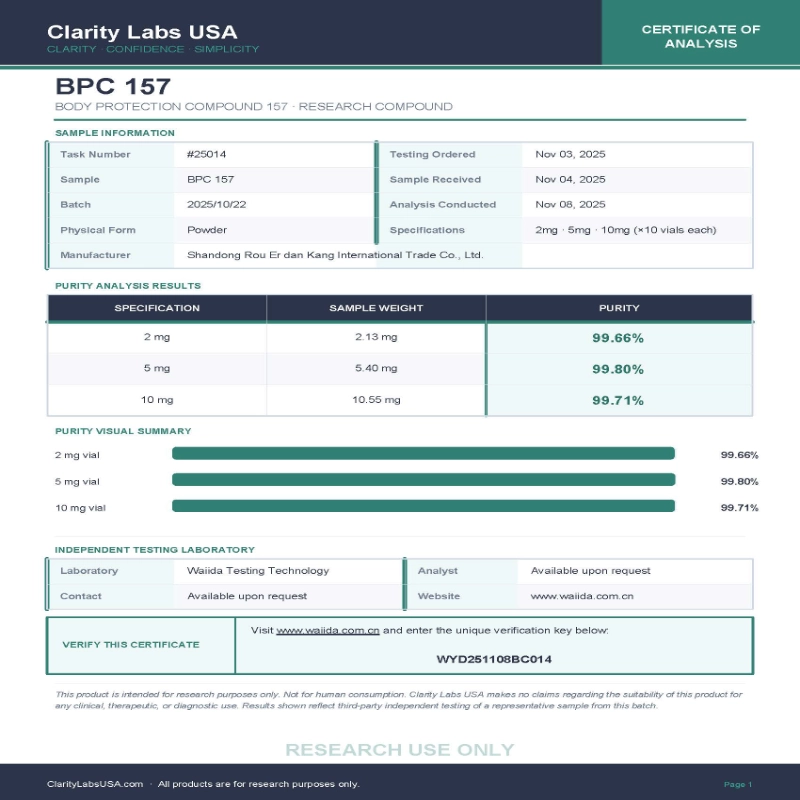
BPC-157 undergoes independent third-party laboratory analysis before distribution. Certificates of Analysis are available on request for every lot.
Thank you! We'll be in touch shortly to confirm your order and arrange payment.